

Welcome back to The Political Spectrum! It’s here! It’s finally here! The Midterm Election is here. So, let’s have some fun! On Thursday, we will have a special edition of the Media Offender Mailbag for the midterms. So if you want to ask a question, hit the subscribe button and let’s do it.
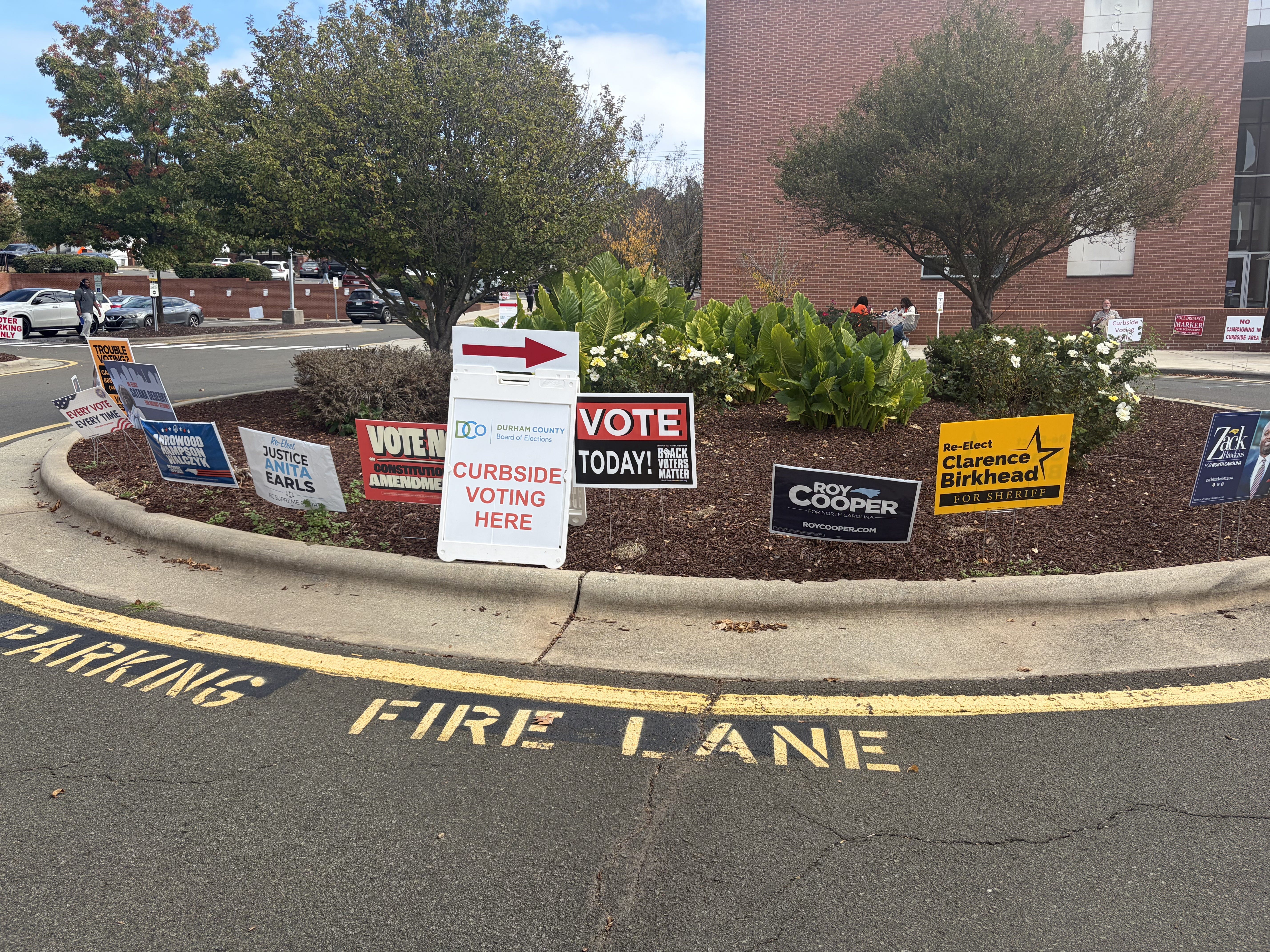
DURHAM, N.C.-North Carolina Central University is located right in Durham. While slightly younger than its fellow North Carolina HBCU, N.C. A&T State University in Greensboro, Durham and NCCU are no less important to the Civil Rights Movement.
In 1957, three years before four N.C. A&T students defiantly sat in at the Woolworth’s, Rev. Douglas Moore, a graduate of the college, accompanied six African American students to patronize the Royal Ice Cream Parlor, a white-owned establishment. One of their attorneys was Floyd McKissick Sr., who would speak on behalf of James Farmer during the March on Washington for Jobs and Freedom in 1963, where Dr. Martin Luther King Jr. would deliver his “I Have a Dream” speech. A month after King would win the Nobel Peace Prize, he addressed 5,000 students at what was then called North Carolina College.
But I didn’t come to Central to meditate on history. I came here on Election Day because two years ago, I stopped by to talk to students and compare how they felt compared two when I visited two years ago ahead of the 2024 presidential election. At the time, I figured since Vice President Kamala Harris was an alumnus of another storied HBCU, Howard University, she might generate some excitement.
While some students were indeed excited to see a fellow HBCU graduate and a Black woman ascend to the top of the Democratic Party, some were not convinced, though. Specifically, Cameron Johnson, then a senior, told me “I think she's getting a lot of love right now, not necessarily because of her policies or anything like that, but because a lot of people can't stand Trump.” Another, Nya Lumsden, from Atlanta, told me that while abortion rights were a top issue for her and she opposed Donald Trump’s policies on abortion, “I don’t think she’s going to keep all the wars away from us like Trump did.”
But this time is different. Readers of The Political Spectrum know we’ve been tracking how young Black voters are furious about both Trump and the Supreme Court’s rolling back of the 1965 Voting Rights Act earlier this summer with the Louisiana v. Callais decision.
Donald Fuller, a first-year law student at the university, said he was disappointed by the ruling.
“Basically, I voted to hopefully get people in position to help the people in America, the people in North Carolina,” Fuller told The Political Spectrum. “So hopefully, that happens, and everyone in my age group, above me, below me, went out and did their duty today.”
Outside the Albert S. Turner Law School Building, students filed in and out to cast their ballots.
As of Tuesday afternoon around 4:30 PM, about 116,652 registered voters in Durham have cast their ballots, according to the Carolina Forward dashboard. That’s 28 percent higher than the turnout in the 2022 midterm, albeit, it’s 25 percent lower than the 2024 presidential election turnout.
If there is a blue wave, the first signs will be in North Carolina. Democrat Roy Cooper, a popular former governor, running miles ahead of his opponent, former Republican National Committee Chairman Michael Whatley.
“He seems genuine,” Fuller said. “Doesn’t use underhanded tactics to attack opposing sides. He looks like he’s actually interested in North Carolina policies.”
The most recent poll from High Point University showed that Cooper leads Whatley by double digits. That could have a down ballot effect and help Democrats flip the state House of Representatives, the first time Democrats would have control of either chamber since 2010.
“I just want to exercise my right,” Quran Walker told The Political Spectrum. He said that his biggest issues were “really, just the increase on the taxes and just really just education in general.”
Fuller said he wanted to see the United States invest more money domestically rather than abroad.
“I’d probably say the most important issue is just getting taxes back into North Carolina or the country’s hands,” he said. “It seems like we, as a country, have steered towards not prioritizing U.S. citizens. So I would love that to be the policy again– is to use our taxes not for our well-being, to help with schooling, to help with food. People who don’t have those things. So that’s probably the most important thing: just giving back to the American people.”
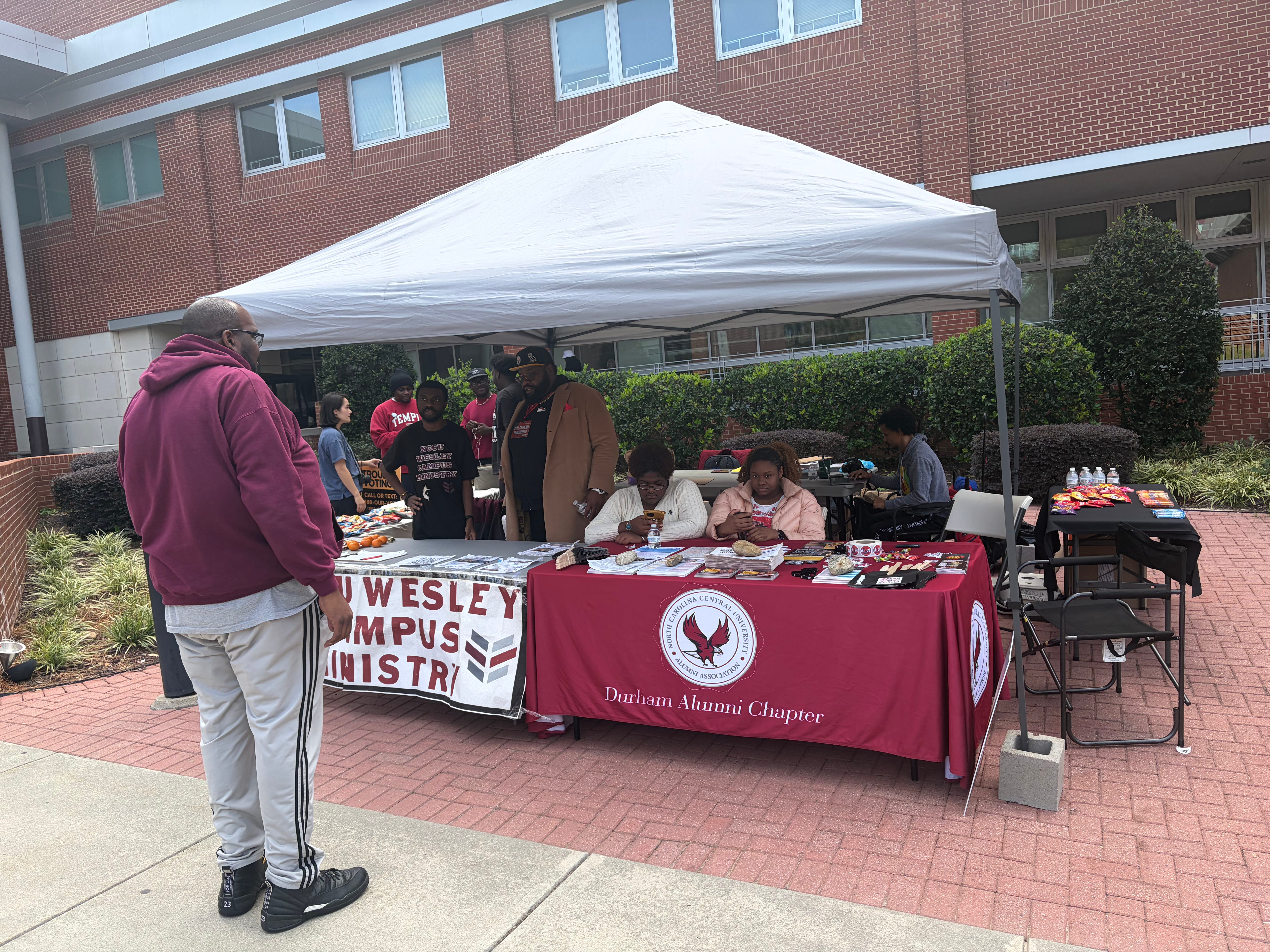
Outside the polling place, the Wesley Campus Ministry congratulated and thanked students for voting. Ahmani Johnson, a junior at Central, told The Political Spectrum that her big issue was one of the three proposed amendments to the state constitution that would reduce the maximum allowed income tax rate from 7 percent to 3.5 percent. Johnson also said it was important to show leaders that voices like hers matter, and that she was much more excited to vote than in the past.
“I was younger then and didn’t really understand much,” she said. Johnson said she did not know much about the Supreme Court’s decision on the Voting Rights Act. But she still expressed some dismay.
“I don’t like that at all. I don’t like that they use that we’re kind of going back in time in terms of like racial profiling and using race to determine things,” she said.
Maurice Rogers, a graduate of Central, said he was disappointed in the Supreme Court’s decision.
“That was definitely a blow to just all America as a whole,” he told The Political Spectrum. “It’s just another example of why we need to exercise our right to vote. Because if we’re just going to keep letting these things happen, then we’re just going to live in an economy and in a nation where we are all going to be literally distraught.”
Rogers said all of the elections mattered to him, but he said education mattered the most to him and the Department of Education needed to be revamped.
“But, you know, you can only start from somewhere,” he said. “I’m starting with my vote and just hoping for the most best outcome.”
Like Republicans in other states, the North Carolina GOP has attempted to give themselves an advantage by doing mid-decade redistricting. Last year, the General Assembly approved a new congressional map in an attempt to take out Rep. Don Davis in North Carolina’s 1st district. Davis, a moderate Black Democrat, who represents a district Trump won, wriggled away from Republicans in 2022 when he first ran and again in 2024.
The Cook Political Report rates the 1st as a toss-up, and at my hotel while eating breakfast, nearly every other ad was an attack ad from Republicans attacking Davis.
But if Cooper has big enough coattails, it might be enough to save Davis and even flip some Republican-leaning districts.
Even as I am filing this story from NCCU’s Student University Center, a gaggle of young female Black student were teasing each other about whether they actually voted.
Midterm tools: Bruce Mehlman with some handy charts for tonight. The nerds at VoteHub have one of the best websites for sickos like me.
What I’m reading: Ruby Cramer in The New Yorker on Haley Stevens’s heel turn.
Your regular Bam Bam post:
That does it for The Political Spectrum. We will have a midterm mailbag on Thursday, so please subscribe below. Happy voting.