

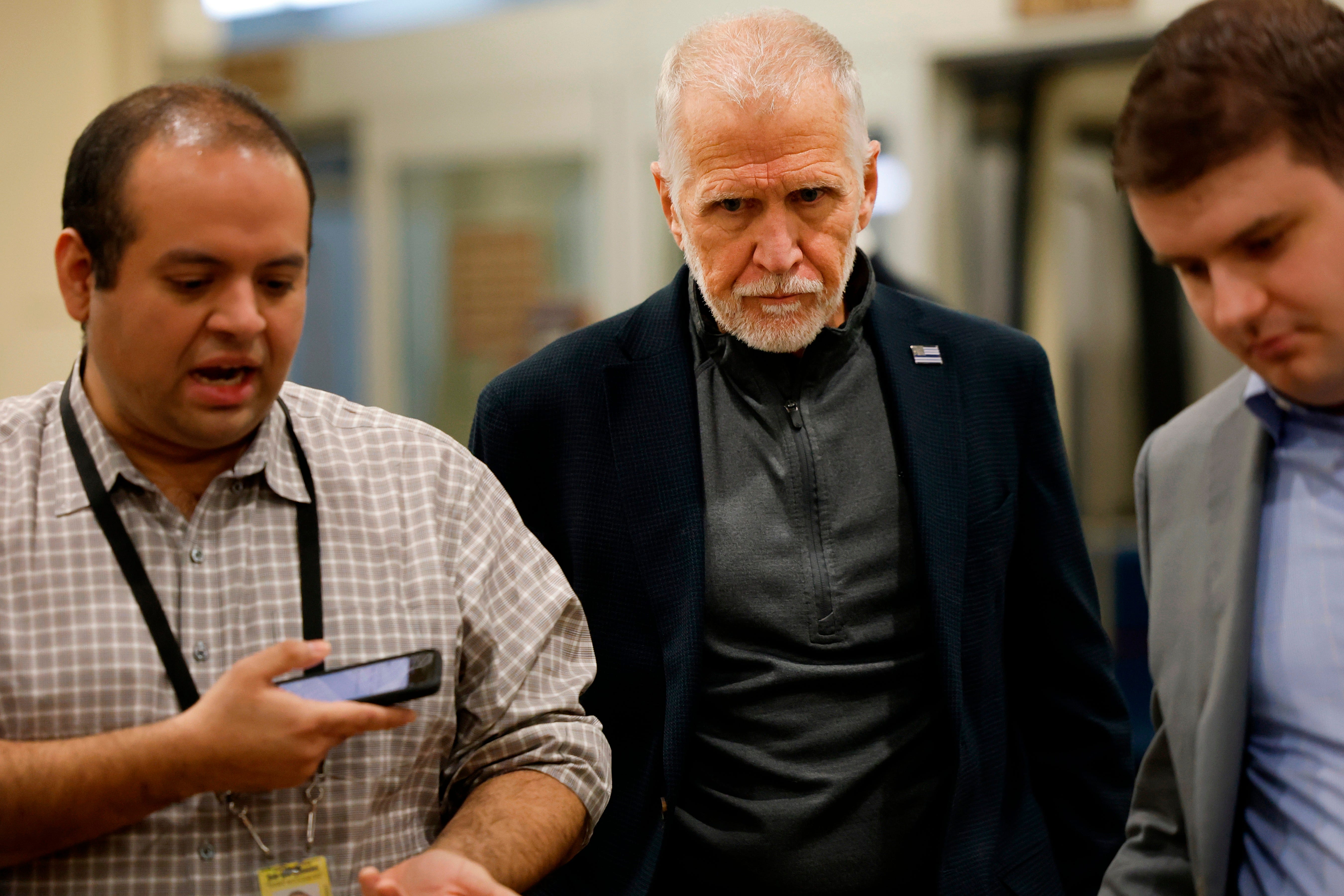
In the days leading up to the 2026 midterm elections, Sen. Thom Tillis had a countdown of days “until whoop-ass” as the main image on his phone. The senior Republican senator was already on his way out the door after he announced in June of last year that he would not seek re-election.
“I first projected it in April of 2025,” Tillis told The Political Spectrum, a full two months before his announcement after he and President Donald Trump had a falling out because of his opposition to the One Big, Beautiful Bill Act that slashed Medicaid.
“My predisposition was not to, but I you know I felt like for a variety of reasons I should keep it in mind,” he said. “But I judged that we were not going to create the sort of feedback loop with the administration to really make sure that the policies got implemented in a way that was politically viable.”
Still, few people could have imagined the thrashing that Republicans received in the Tar Heel state. Two weeks ago today, Roy Cooper, the former governor, defeated former Republican National Committee Chairman Michael Whatley by 19.5 points.
“Only three people in North Carolina history who have lost by a larger margin since popular votes for senators has occurred,” Tillis said.
“And it was because the unaffiliated did not stay home,” he said. “They were actually pretty mobilized, and they were mobilized against our party brand.”
I’ve known Tillis since I was a college reporter working at the state and national desk of The Daily Tar Heel, the independent student newspaper at the University of North Carolina-Chapel Hill. I graduated in 2014 and came to Washington, D.C. the same year he became a senator.
Since his decision to not run for re-election, Tillis has become more candid in his thoughts–though he still votes for many of the president’s nominees–while wearing a Lumbee tribe bolo, to the extent some like the Washington Sun’s Igor Bobic calls it Tillis’s YOLO Bolo. I caught up with Tillis a week after the midterm to get his thoughts for an exit interview before he leaves the Senate.
Specifically, I wanted to know what he thought about the of years of work by Tillis and Senate President Pro Tempore Phil Berger vanishing.
In 2008, Barack Obama became the first Democratic presidential candidate to win North Carolina since Jimmy Carter. In response, Tillis and Berger orchestrated the red wave in 2010 that led Republicans to win control of both chambers of the North Carolina General Assembly for the first time since 1898.
In 2012, Mitt Romney would win the state, Republicans would win a veto-proof supermajority in the House, where Tillis would become speaker, and the Senate. Pat McCrory would win the governorship, giving the GOP a trifecta. In 2014, Tillis narrowly defeated Sen. Kay Hagan, who won the same year Obama won.
But Tillis struggled under the Trump era of the GOP. While he voted to confirm almost all of Trump’s nominees, including all three of his Supreme Court justices, and voted to acquit Trump after the president’s actions on January 6, he never fit the MAGA temperament.
He would find more political success during Joe Biden’s presidency, having earned a second term in 2020 when Trump also won the state while Cooper won a second term for governor. In 2022, he brokered the Bipartisan Safer Communities Act, the first major piece of gun control legislation in 28 years, with fellow Republican Sen. John Cornyn of Texas and Democratic Sens. Chris Murphy of Connecticut and Kyrsten Sinema of Arizona, the latter of whom would later become an independent. That came after the shooting in Robb Elementary School in Uvalde, Texas.
That same year, he again worked with with Sinema, as well as Republican Sens. Susan Collins of Maine and Rob Portman of Ohio as well as Democratic Sen. Tammy Baldwin of Wisconsin, on the Repsect for Marriage Act. The law codified protections for both interracially married couples and same-sex couples.
But back home, his dealmaking earned him the costernation and eventual censure from the state party in 2023 during the state party convention. That same week, Trump–fresh off being indicted by Special Counsel Jack Smith for Trump’s allegedly mishandling classified documents at his Mar-a-Lago estate–received a hero’s welcome in Greensboro.
Trump would win re-election a year later, but not without inflicting serious damage by backing Lt. Gov. Mark Robinson, the Republican nominee for governor, who had a history of inflammatory remarks and who came under increased scrutiny after CNN reported Robinson frequented a pornography site called Nude Africa where he said “I’m a black NAZI!” That led to Democrat Josh Stein winning by almost 15 points and Democrats winning downballot races.
But that was a mere appetizer for the thrashing Republicans received in 2026. In 2025, as part of the larger redistricting wars to give Republicans an advantage, North Carolina Republicans redrew their congressional maps in an effort to defeat Democratic Rep. Don Davis in the 1st district.
It would backfire massively. Republicans lost four seats in the House of Representatives. Rep. Chuck Edwards, whom Tillis backed in 2022 to take out Rep. Madison Cawthorn in the 11th district, chose not to run for re-election after the House Ethics Committee released a report about alleged inappropriate toward female staffers. Democrat Jamie Ager would then beat state legislator Jennifer Balkcom.
In the 13th district, Republican Rep. Brad Knott would lose to Paul Barringer. Rep. Addison McDowell lost his race in the 6th district to 34-year-old High Point Mayor Cyril Jefferson. In the 9th district, National Republican Congressional Committee Chairman Rep. Richard Hudson also lost to Richard Ojeda. In the 3rd district, Raymond Smith defeated Rep. Greg Murphy.
In the 5th district, Rep. Virginia Foxx has requested a recount against Democrat Chuck Hubbard in a race where Hubbard leads by 331 votes.
But perhaps the most humiliating effort came when Rep. Tim Moore of the 14th district would lose to Lakesha Womack despite the fact Moore drew the district so he could run for Congress when he succeeded Tillis as state speaker of the house. This came despite the fact Womack spent less than $60,000 during the campaign.
And even lower on the ballot, Democrats flipped the state house of representatives for the first time in 16 years. Democrats are now only one Senate seat short of winning the upper chamber, but Democrat Catina Hamm has requested a recount. And as a coup de grâce, Berger, who signed the new congressional map into law, lost a primary to Rockingham County Sheriff Sam Page.
Tillis said that he knew redistricting was a bad idea, but did not get involved in it.
“I didn’t get involved because you know I let it,” he said. “Number one, it wouldn’t affect me. Number two, the congressional members seemed to think it was a good idea. Number three, the legislative leaders decided to do it.”
Tillis credited Indiana State Sen. Rod Bray, who refused to go along with Trump’s efforts to redraw Indiana’s congressional map.
“And Indiana got hurt, but they would have been wiped out if they’d done the districts, that these people in the White House told the president would be good for him,” Tillis said.
Tillis is often shy about directly criticizing the president directly, but often openly criticizes his advisers like longtime Trump adviser Stephen Miller, an alumnus of Durham’s Duke University, or Defense Secretary Pete Hegseth, whom Tillis voted to confirm but has since said he regrets greenlighting. He famously helped torpedo Homeland Secrurity Secretary Kristi Noem, whom he had previously voted to confirm, in February, which helped trigger her resignation.

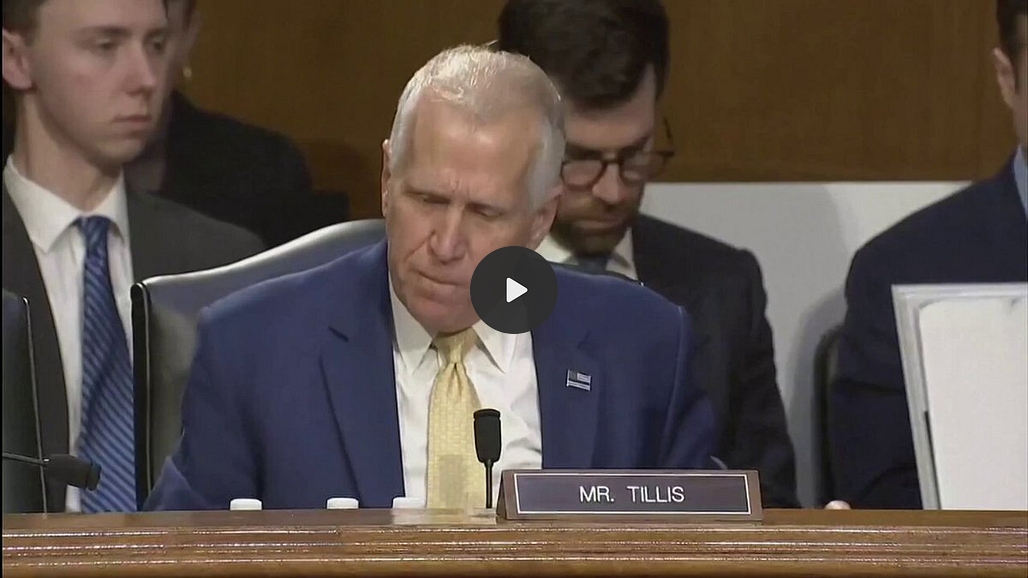
That approach does not seem to be working for the president though. He has ridiculed Republicans like him and Sen. Lisa Murkowski of Alaska, who also called for Noem’s exit, “losers.”
Trump endorsed Ken Paxton in the Republican Senate primary against Cornyn, Tillis’s negotiating partner in the bipartisan gun bill, which led to James Talarico becoming the first Democrat to win a Senate seat in Texas in 38 years. If anything, Trump is even more unbound.
And despite his apprehension about Todd Blanche to replace Pam Bondi as attorney general because of Blanche’s announcement of the “anti-weaponization fund,” he and Cornyn still voted to confirm Blanche. Meanwhile, his other negotiating partner Collins lost her seat in Maine, a largely blue state, partially because she was seen as voting with the president too much.
Still, Tillis warned that no party can win–and especially not in North Carolina–by appealing to the most extreme parts of the base.
“If you work so hard to look like a darling of the the DSA crowd on the Democrat side, or the ultra-MAGA crowd on the Republican side,” Tillis said. “You will not win the independents, and that’s exactly what laid the groundwork for Michael’s historic margin of loss.”
It’s particularly salient in a state where 40 percent of voters are unaffiliated. But Republicans have to learn this lesson quickly. Not only will North Carolina’s 16 electoral votes be up for grabs, but so will the governorship, a chance to win back some of those old congressional seats, the balance of the state’s supreme court and a chance at Republican Sen. Ted Budd to win a second term.
Otherwise, North Carolina Republicans might have to reset the “whoop-ass” clock.
For background reading: Chris Cooper’s excellent Anatomy of a Purple State Substack. The Assembly is a fantastic magazine covering the intricacies of North Carolina politics (full disclosure, some of my friends run it, but it’s still cool). I wrote about the new North Carolina congressional Democrats for The Assembly. Jonathan Martin, aka JMart, over at Politico had an in-depth interview with Tillis ahead of the thrashing down South.
Your regular Bam Bam post:
That’s it for The Political Spectrum. If you like what you read, subscribe down below. If you want to support a travel budget, you can also send money to Ko-Fi.com/EricMGarcia.