

Edited by Andrew Donaldson
Welcome back to The Political Spectrum! We are eight days out from polls closing! Reminder that I will be in Atlanta this week covering Barack Obama’s rally for Democrats in Georgia. Your financial support through subscriptions or direct contributions goes a long way.
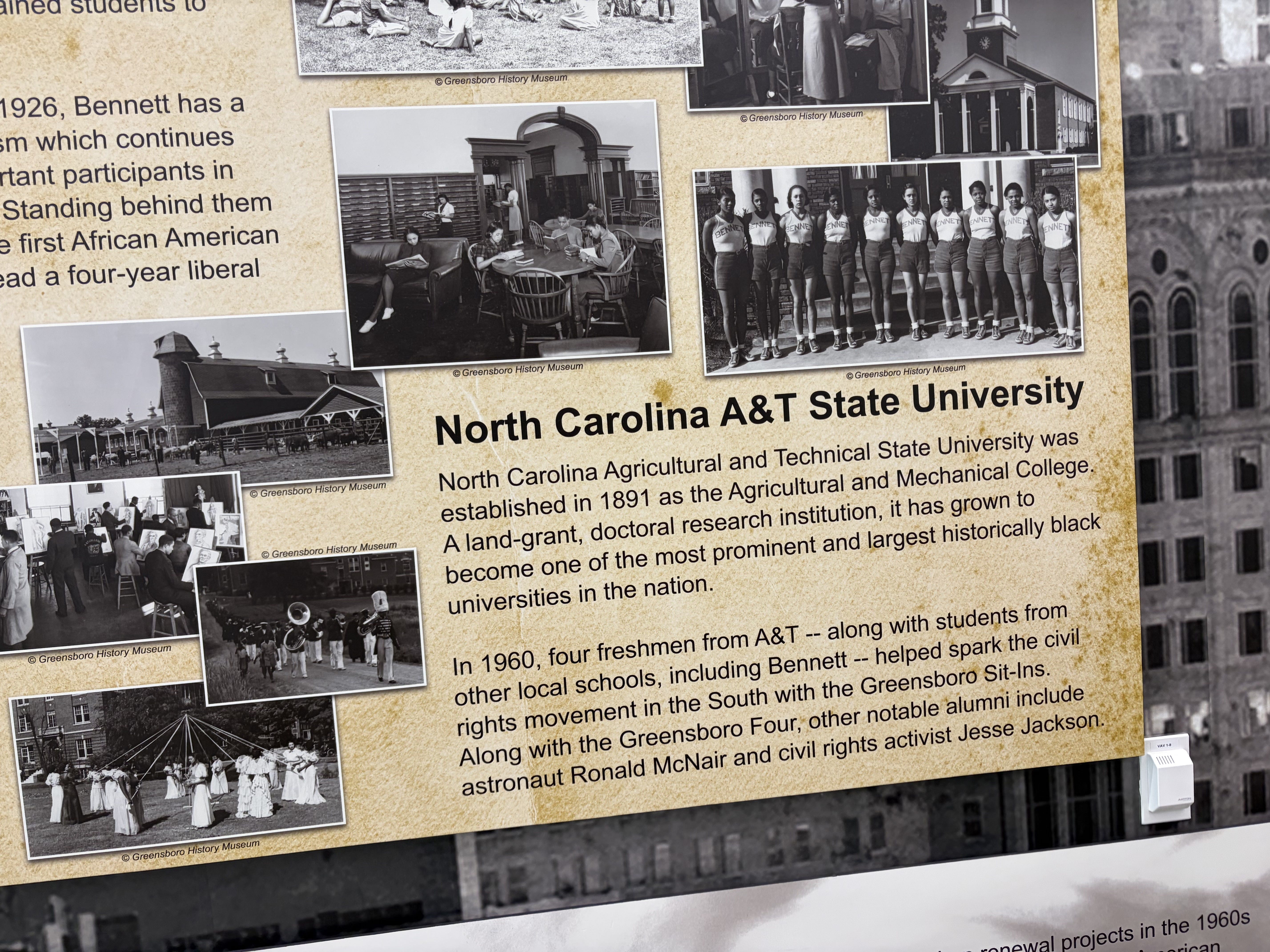
The Union Square campus that hosts nursing students at North Carolina A&T State University and the University of North Carolina-Greensboro is fully aware of the history of the city’’s role in the civil rights movement.
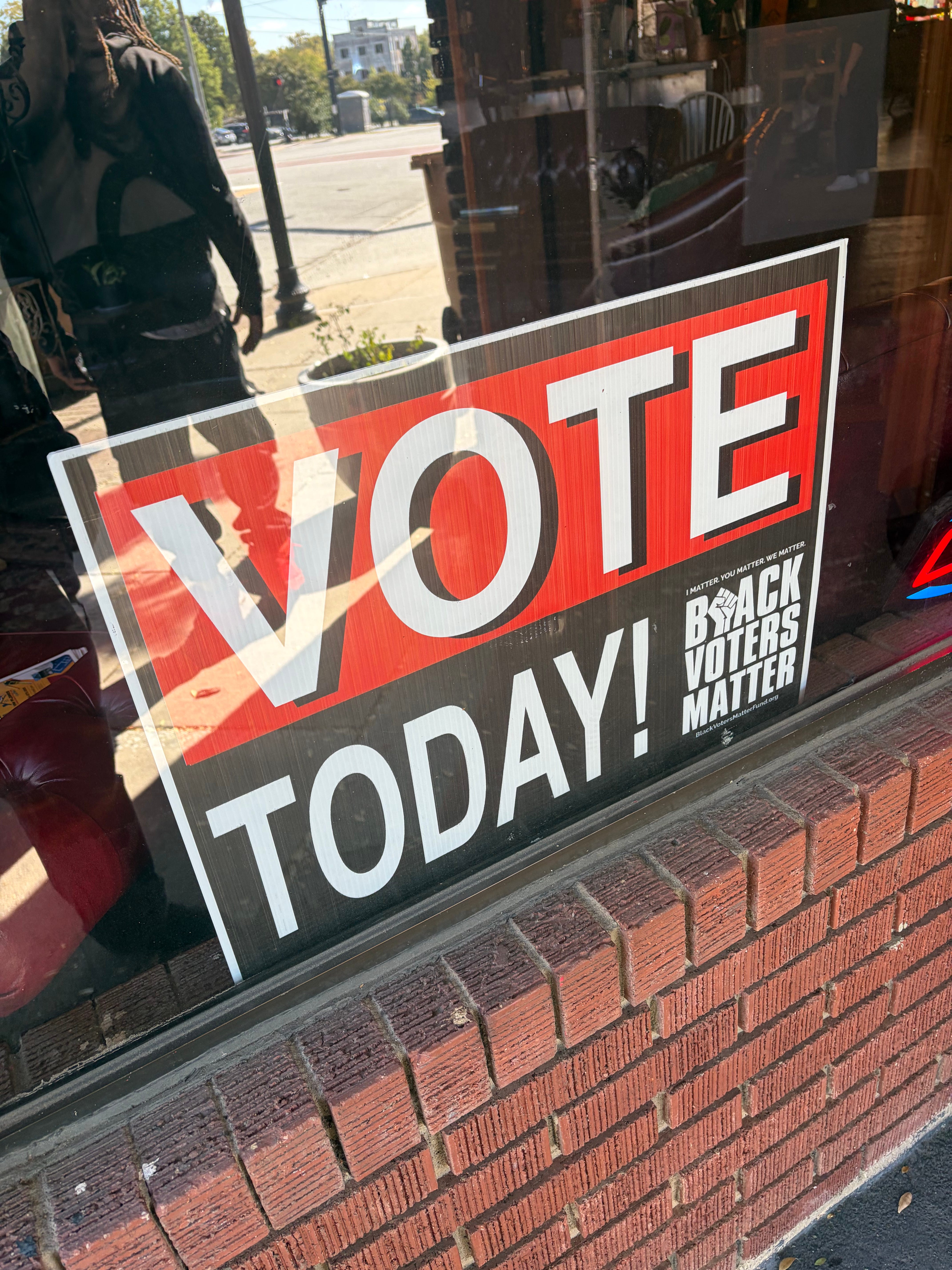
The campus features an image of the four N.C. A&T students who, in 1960, sat at the Woolworth lunch counter demanding to be served. Across the street from the polling place, Common Grounds, a coffee shop, has a sign in its window saying “Vote Today: Black Voters Matter.”
“Ancestors have fought for this right, and so it’s my duty to do it,” Nicole Watlington, an alumna of N.C. A&T, told The Political Spectrum.
Sunday was the last day of the “Souls to the Polls,” when Black voters typically go to cast their ballot after church. But earlier this year, the Guilford County Board of Elections denied an early voting location at either UNCG or N.C. A&T.
“Well, given that we are the biggest HBCU in the country, I think that it is a shame that they close it,” Watlington said. “However, Aggies do, yeah, and we will make a way as we always have and get the vote done.”
In the same respect, Keris Blackmon, a freshman at N.C. A&T, said Sunday was her first time voting.
“Upperclassmen really did express how it was super convenient and just to have that removed, I think they’re attempting to disenfranchise us, and that’s not right,” Blackmon told The Political Spectrum.
North Carolina has received massive amounts of media attention given that former Gov. Roy Cooper, a Democrat, is running against Michael Whatley, the former Republican National Committee chairman, for the state’s open Senate seat. But North Carolina also has an election for its supreme court, with incumbent Democratic Justice Anita Earls running against Republican Sarah Stevens.
In addition, three proposed constitutional amendments will appear on the ballot: one to reduce the maximum-allowed income tax rate from 7 percent to 3.5 percent; another to require photo ID to all methods to all forms of voting; and another to limit property tax increases by local governments.
But national issues are also weighing on voters.
“ICE is really upsetting,” Blackmon said, in reference to Immigration and Customs Enforcement, the agency within the Department of Homeland Security that has come under intense scrutiny after the killing of Renee Good in Minneapolis.
As a student, she was frustrated by provisions for student loans in President Donald Trump’s One Big Beautiful Bill Act. The law set a lifetime limit of $257,500 for federal student loans and removed numerous repayment plans.
Throughout the day, there was a trickle in of younger voters, largely Black women, but some younger Black men.
Kyra Brice, another student at N.C. A&T, said that she was most concerned about the cost of living, specifically with groceries and gas prices. She also highlighted that many of her classmates marched to Union Square to cast their ballots.
“I’m pretty sure they’ll do it even more because our voices deserve to be heard,” Brice told The Political Spectrum.
And it looks like Brice is not the only one who feels this way.
According to the North Carolina Free Enterprise Foundation’s early vote tracker, voters between the ages of 18 and 25 are voting at 2.1 times the pace they did in 2022 and Black voters are voting at 1.6 times the pace they did in 2022.
So far, we’ve seen that a potential blue wave has been especially localized in red states. If these demographics vote as Democratic as the trends may show, it might crash right on the shores of the Tar Heel State.
What I’m reading: Benjamin S. Weiss’s dispatch from Sugar Land, Texas, in HuffPost about how Republicans’ anti-Indian rhetoric might cost them the state. Lena Sun’s profile of Demetre Daskalakis in The Washington Post. A fascinating profile by Benjamin Oreskes in The New York Times of New York Gov. Kathy Hochul and how her family’s time in a trailer park shaped her politics.
What made me laugh: Like everybody, I couldn’t breathe when watching Charles Barkley fabulously fail at this segment of “Who he Play for?” on Inside the NBA.
That does it for this edition of The Political Spectrum. If you like what you read, please consider subscribing. And we’ll see you in Georgia.