

Welcome back to The Political Spectrum! Happy Thanksgiving week. Congress is out, but when they return, they will have plenty to discuss when it comes to health care. Top of mind should be fixing home care.
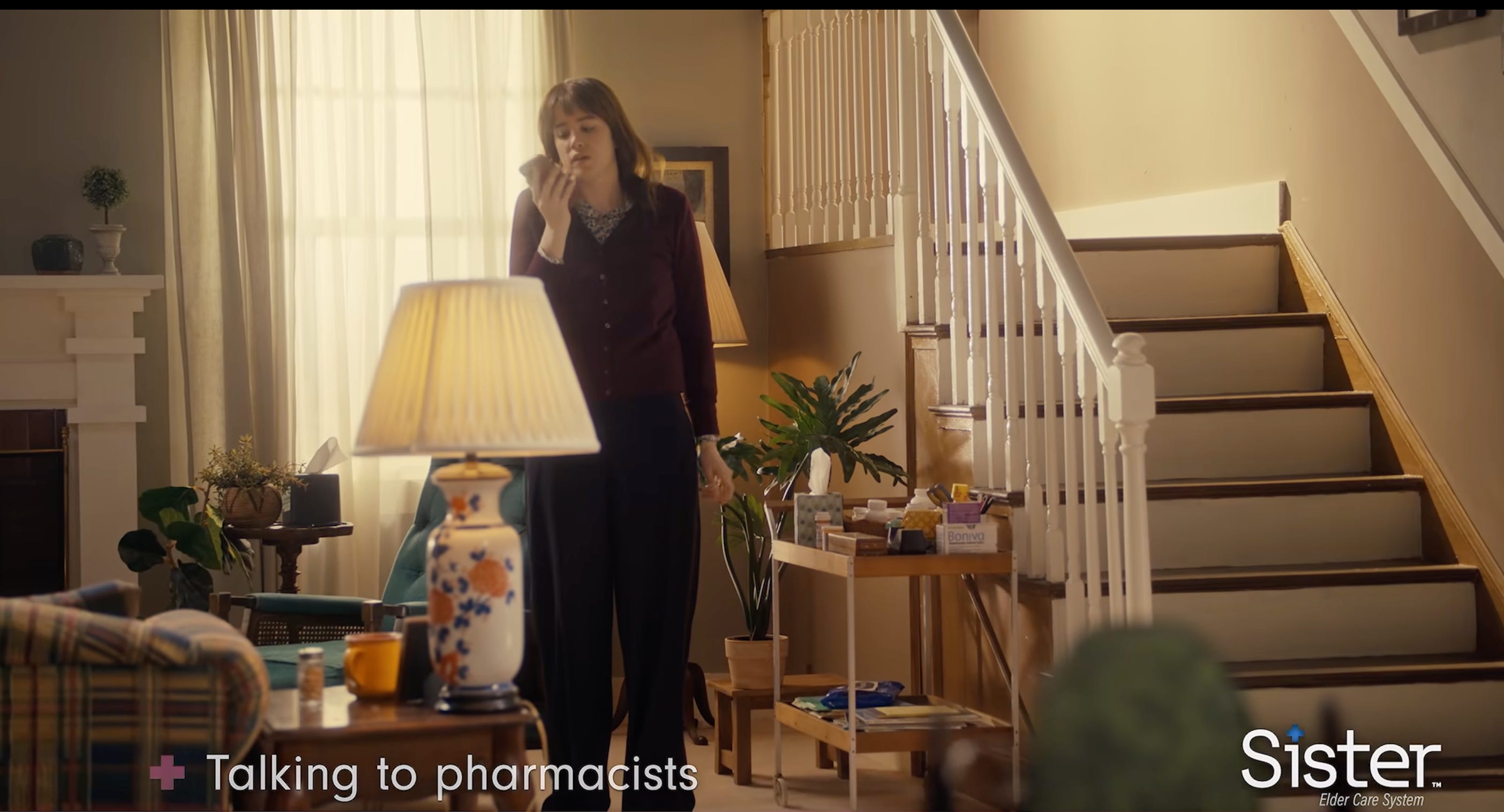
Last week, Saturday Night Live caused a stir when host John Mulaney spearheaded a skit entitled “Sister,” which lampoons the fact that sisters and daughters often take care of their elderly parents.
But behind the laughs, the skit hit a visceral note for many women, considering the fact that daughters spend twice as many hours caring for their parents that sons do. A 2020 survey from the AARP and the National Alliance for Caregiving from 2025 found that about 61 percent of caregivers are female. Women are also more likely to care for a non-relative.
Not surprisingly, Democrats in Congress praised the sketch.
“It was awesome,” Sen. Kirsten Gillibrand (D-N.Y.), the incoming chairwoman of the Senate Aging Committee, told The Political Spectrum.
Last week, Democrat Mary Peltola officially defeated Republican incumbent Sen. Dan Sullivan of Alaska. This means that Democrats will have 56 Senate seats in January, just four shy of being able to overcome a filibuster. Gillibrand said that the Democrats will focus on this subject.
“So we’ll be doing a lot of hearings on the care economy, making sure we have enough home health aides, making sure the pay for home health aides goes up, so we have enough people to do it,” Gillibrand said. This comes in addition to Democrats’ ambitious plans to include dental, hearing and vision to Medicare as well as their plans to make health care universal for children.
Sen. Andy Kim (D-N.J.) has spearheaded the latter effort with his MediKids plan. But he’s also spoken openly about the difficulties he faces with caring for his father who has Alzheimer’s disease. The first-term New Jersey senator told The Political Spectrum that his father has progressed beyond what Medicare can serve.
“But it’s been just financially catastrophic in the meantime, right?” Kim told The Political Spectrum on Thursday. “And I’m having a hard time navigating Medicare and Medicaid, and I have oversight over Medicare and Medicaid. And that’s you know if I’m having trouble as a United States senator, then what’s the average American going to have to handle with that?”
Home care has long been an interest of mine and it will be a subject of this newsletter. I wrote extensively about the ways the way services meant to keep elderly people and people with disabilities in their homes often come up short in my first book, We’re Not Broken: Changing the Autism Conversation.
Efforts to pay for home care have come in fits and starts. According to KFF, 649,905 Americans are waiting for Medicaid home and community-based services. The only group that has more people waiting than seniors and adults with physical disabilities–where 205,137 are on a list–are people with intellectual and developmental disabilities.
During Joe Biden’s 2020 run, he pledged to dedicate $450 billion to home care. But during deliberations for the proposed Build Back Better legislation, the amount of money dedicated to paying for Medicaid home and community-based services would be consistently whittled down. In the initial version of his “American Jobs Plan,” which would include physical infrastructure and social services, home care had a price tag of $400 billion.
Later, Biden would split the infrastructure and social spending parts. The final amount in the version that the House of Representatives would pass for home care would be $150 billion, less than half of Biden’s opening bid. That proposal would eventually die when then-Sen. Joe Manchin, a conservative Democrat from West Virginia, announced his opposition to the bill. The Inflation Reduction Act legislation that passed in 2022 would not include any spending for home care.
In 2024, after she became the Democratic nominee for president, Vice President Kamala Harris announced that should she win the White House, she would support legislation to allow for Medicare to pay for home care.
Kim said that he has similar legislation with Rep. Debbie Dingell (D-Mich.) that would allow Medicare to pay for home care.
“It still needs to be fleshed out some more, but I think it’s on the right path.” he said. Kim said that increasing eligibility would benefit more people because most people want to age at home.
“But also it’s just financially better for our country too, because you can try to offset institutional care,” he said. “So if you can provide some care services, it can hopefully slow down the progression of their descent.”
Gillibrand said she also supported the plan Harris proposed.
But it’s not clear whether home care would take precedent as Democrats plan an ambitious health care agenda.
And even if they did, it’s not entirely clear President Donald Trump would sign the legislation. During the final weeks of his 2024 run, Trump promised to enact a tax credit for caregivers.
That would not be included in Trump’s “One Big, Beautiful Bill Act.” In addition, the bill’s cuts to Medicaid might disproportionately hit Medicaid home care because Medicaid is legally required to pay for nursing homes, but home care is optional. That might lead to states cutting home care first, according to an article in The Cornell Journal of Law and Public Policy.
Still, the fact that a skit on one of the most popular sketch comedy shows resonated with many Americans shows how salient the issue might be.
“I mean, as a male caregiver, I just say, ‘look, like, guys, we need to step up,’” Kim said. “But the other side of it is that we shouldn’t be in a situation where we’re just pitting siblings and family against each other.”
And given the integral role of women in Democrats’ victories, both in terms of candidates and voters, it might be impossible for the party to relegate home care as an ancillary topic in their 2027 agenda.
What I’m reading: Christopher Hooks in The Texas Monthly writes about how Republicans moved too far to the right and cost themselves the state. Two great profiles of Sen.-elect Annie Andrews, one by Emily Davies in The New York Times and another by Liz Goodwin in The Washington Post. Sara Luterman–the godmother of this newsletter–and Amanda Becker at The 19th News go deeper on the role women play in home care. Gene Park in The Washington Post is probably the best video game journalist right now and his review of Grand Theft Auto VI is a work of art.
Albums on repeat: Amon Amarth’s The Allfather Awakens is one of the best metal albums this year (Note: Amon Amarth is the only concert I’ve attended where I thought I was gonna die). Grand Theft Auto VI featuring “Love is a Long Road” has me replaying Tom Petty’s Full Moon Fever.
Your regular Bam Bam post:

That’s it for The Political Spectrum. Reminder that this newsletter is only possible because of paid subscriptions. If you like what you read, subscribe down below. If you want to support a travel budget, you can also send money to Ko-Fi.com/EricMGarcia.
The intersection of politics and disabilities of all kinds is really your lane. While I appreciate all you post, your passion and expertise in this area really comes through. Enjoyed your first book and am looking forward to your second.
Several years ago I picked up part-time work in a care home for severely disabled adults and the experience was underwhelming to say the least. I wish more Americans were aware of how disappointing the available care for vulnerable Americans truly is. This skit is a start.