


Edited by Andrew Donaldson
Welcome back to The Political Spectrum! We have 11 days left until midterms polls close. Reminder, I’ll be in Greensboro, North Carolina this weekend to cover early voting and Atlanta next week. Message tips and food recs.
The National Autistic Society, the major autism charity in the United Kingdom, released a survey on Thursday on autism and disinformation. The poll surveyed autistic people, parents and caregivers of autistic people.
The results were incredibly telling. Here’s a direct quote from the press release:
A staggering 98% expressed concern about misinformation.
84% said they believed the volume of misinformation about autism had increased in the past two years.
Eight in 10 autistic people believe autism is inaccurately represented – both in the media and online.
In the last year, the top three places to hear misinformation was in the mainstream media 1,484 (84%), on social media 1,362 (77%), from politicians or other public figures 1,272 (72%).
The organization’s Instagram page also said that 77 percent of autistic respondents “felt too scared to tell others they’re autistic.”
Autistic people and their loved ones also have good reason to believe that misinformation about autism comes from mainstream media, social media and politicians or public figures. I wrote a piece published in The Boston Globe opinion section this week about the growing backlash against neurodiversity in response to the government in the U.K. releasing its report on mental health conditions, autism and attention-deficit/hyperactivity disorder (ADHD), quoted here:
Nigel Farage, the leader of the far-right Reform Party, has said that when an 18-year-old is put “on a disability register, unemployed, with a high level of benefits, you’re telling people aged 18 that they’re victims.” Even Dame Uta Frith, the German British psychologist responsible for much of the public understanding around autism, spoke earlier this year about how she no longer believes autism is a spectrum.
The latest report was met with a headline from the BBC saying, “ADHD and autism at risk of over-diagnosis, says government review.” But the report was more nuanced. While it said current trends might show risks changing from underdiagnosis “towards an increased risk of misdiagnosis and overdiagnosis,” it could not conclude “that overdiagnosis is occurring at scale.” As a result, the report suggested that the UK health care system move from a diagnosis-based system to a more needs-based system.
Obviously, the risks of overdiagnosis or misdiagnosis have to always be weighed. A misdiagnosis or wrong diagnosis can be just as disorienting as getting an autism diagnosis can be clarifying. Just this week, actress Christina Applegate said she had been misdiagnosed with multiple sclerosis and is now “back at square one.”
Still, fears of misdiagnosis should not discount that people who need a diagnosis both to access services and reorient their lives around their disability should have access to a diagnosis.
The United States seems to have another problem described in the National Autistic Society survey: the synthesis of disinformation from politicians and social media. In September 2025, President Donald Trump, Secretary of Health and Human Services Robert F. Kennedy Jr., and the Food and Drug Administration made a major announcement linking the use of acetaminophen, commonly known as Tylenol in the United States, during pregnancy to children developing autism. The announcement came despite no evidence that Tylenol causes autism.
The lack of truth didn’t deter influencers online. Researchers at Rutgers New Jersey Medical School analyzed 53 videos on TikTok posted from the day of the announcement to November 2025 about the subject and found that only 52.8 percent of videos contained information consistent with scientific evidence. By contrast, 28.3 percent of videos contained misinformation and 18.9 percent of videos contained mixed or uncertain information. But the researchers also found that posts with misinformation accounted for 52.4 percent of 28.1 million total views.
It’s clear that the administration has not only the biggest bully pulpit, but an entire army of content creators who can amplify misinformation. A second study found that of 65 health organizations, only 14 institutions posted Instagram about the White House’s remarks.
This kind of disinformation does not happen in a vacuum. Much of my first book about how when politicians receive bad information, it leads to bad policy. But the reverse is also true that politicians can affect individual decisions. In the U.K., this might discourage autistic people from seeking a diagnosis. In the U.S., it can mean expectant parents not taking Tylenol to provide relief for a fever.
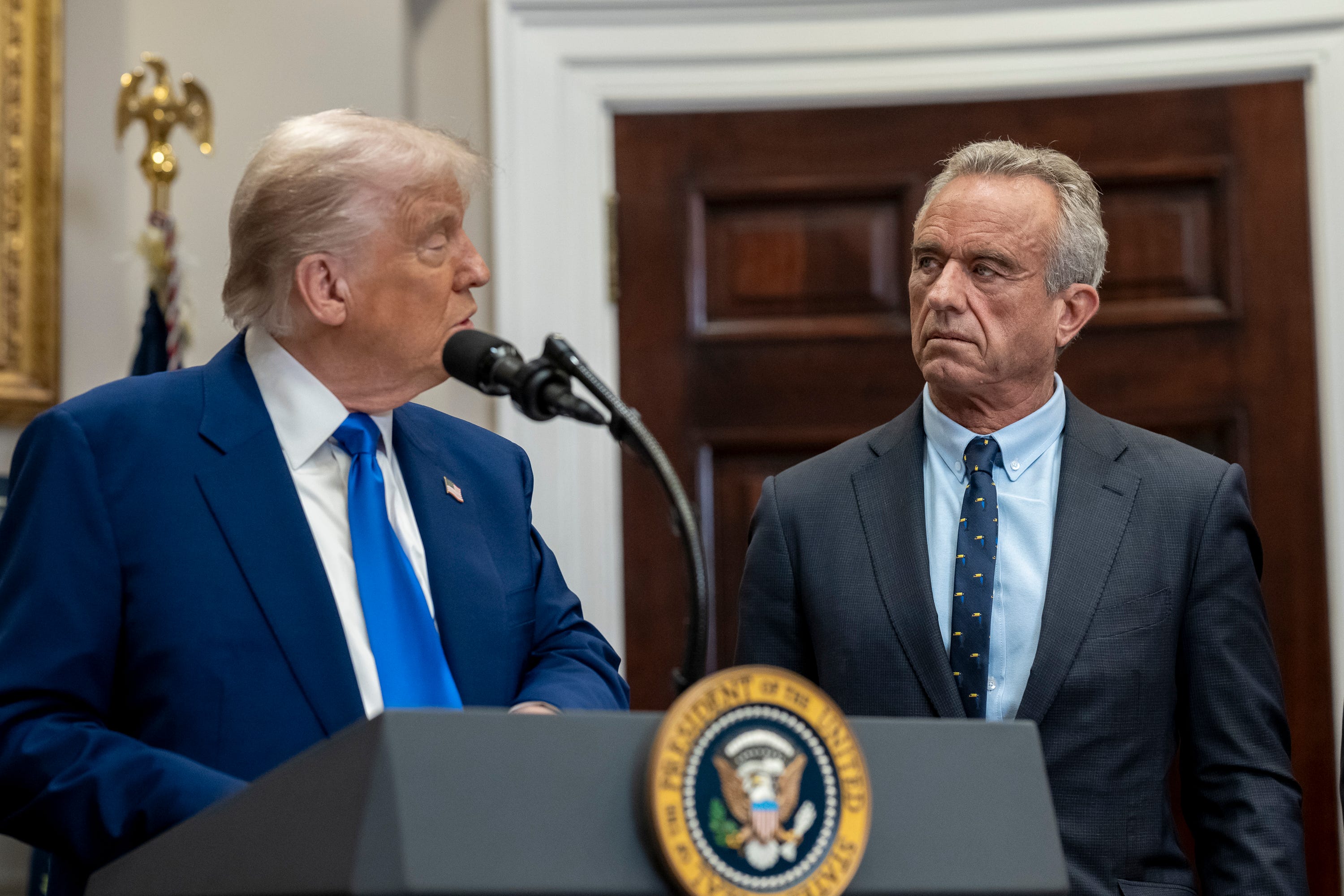
Unfortunately, the disinformation factory will not stop. And even once Farage, Trump, Kennedy and others exit, their pronouncements will permanently alter the information landscape.
Writing hither and yonder: I wrote for MS NOW about how Trump hollowed out state parties. The aforementioned Globe op-ed. In The Washington Examiner, I break down Maryland Democrats’ proposed constitutional amendment for redistricting.
What accounts I’m following: Like everyone else, I’m following early voting, but I am not smart enough to interpret the data. I’d suggest following the X accounts @ZacharyDonnini, the entire @VoteHub team, @DjsokeSpeaking, @theoelections and @FatUglyRat.
What I’m reading: Natalie Fertig’s dispatch for New York Magazine about how Vivek Ramaswamy has failed to win over voters in Ohio even before his ad featuring his Democratic opponent Amy Acton’s mom. Also in New York, April Lockhart’s essay about her marriage failing is a gut-wrenching read. A good essay in The Atlantic about why men are not looking for work.
That’s it for today’s edition of The Political Spectrum. If you like what you read, subscribe below and we’ll see you in Greensboro.
I am concerned the naysayers have weaseled their way into the community and some of us now spend far too much time online gatekeeping who is and isn’t autistic when we could be united in advocating for those among us who are unable to advocate for themselves.