

Welcome back to The Political Spectrum! Apologies for not doing a proper write-up of the midterms. I have been on deadline for a few other pieces elsewhere and wanted to write some other pieces in this space. Second of all, plenty of times, the immediate reactions to election results are not the most accurate ones. I wanted to accurately gather my thoughts. Still, if you like this post and are a free subscriber, please consider a paid subscription.
The midterm elections are almost done. The only major results that have yet to be called at this point are Republican incumbent Sen. Cindy Hyde-Smith versus Scott Colom in Mississippi and Alaska Republican incumbent Sen. Dan Sullivan versus Democrat Mary Peltola.
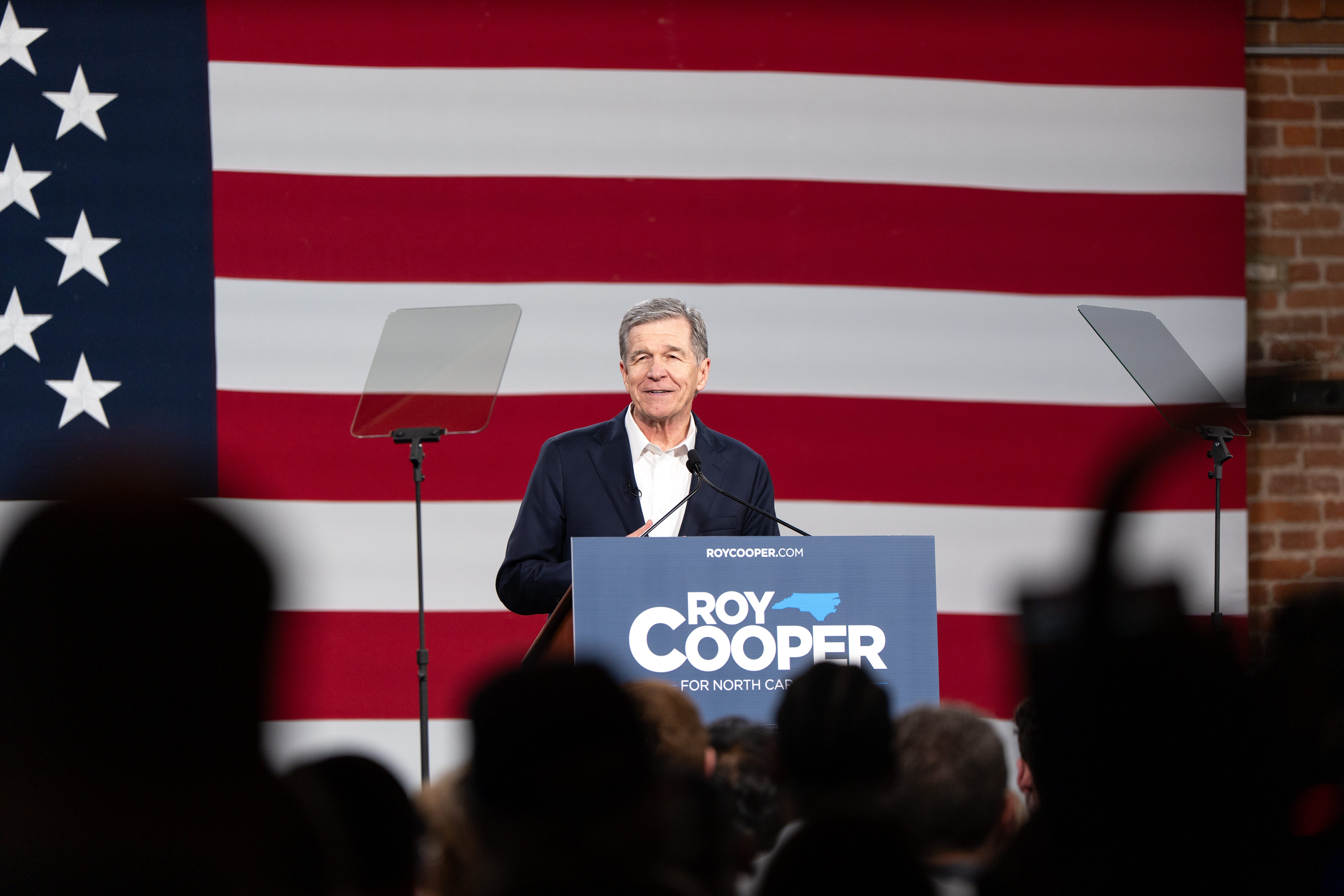
But even without those two races, Democrats blasted through all expectations. Former North Carolina Gov. Roy Cooper defeated Michael Whatley by 19.5 points and dragged a bunch of Democratic candidates for Congress and the state legislature.
In neighboring South Carolina, which Donald Trump won by almost 18 points in 2024, Sen. Darline Graham, whom Trump picked to replace the late Lindsey Graham, lost to Democrat Annie Andrews. In Georgia, not only did Sen. Jon Ossoff won re-election by more than 18 points; the entire state slate flipped. Democrats won Senate seats in Kansas and Iowa, states previously off the map. And, of course, Texas.
But the scene might be even more brutal for Republicans on the local level. Democrats held the governorship in Kansas, once considered a difficult task, and defeated Republican Gov. Joe Lombardo, a popular governor. The latter meant Nevada will now have a trifecta alongside Michigan, Wisconsin, Minnesota, Pennsylvania and Arizona, the latter of which has not had a trifecta in six years.
This was not a Blue Wave, it’s not a Blue Tsunami. It’s a Blue Bloodbath. And there it is a full repudiation of Trump and the MAGA movement on a level the president has never experienced. It also means Democrats will have the ability to not only reshape policy on the state level, but have a whole new crop of Democratic talent.
Here are five takeaways from Tuesday’s election results.
Trump finally faces accountability

Trump is not a man used to the consequences of his actions. He called Mexicans drug dealers and rapists only to eventually improve his margins with Hispanic voters in his 2024 presidential campaign. His supporters stormed the Capitol in an attempt to overturn the 2020 presidential election and a majority of Republicans refused to impeach or convict him. Even after a jury in Manhattan found him guilty on 34 felony counts, he never went to prison.
And politically, he paid even fewer consequences. In 2018, his first midterm, Democrats won a majority in the House of Representatives, but Democrats only flipped two Senate seats–Nevada and Arizona–but lost four Senate seats in North Dakota, Indiana, Missouri and Florida. He lost his 2020 re-election campaign, but they actually lost 13 House seats. Then in 2024, despite winning a narrow majority, his victory initially looked bigger than it was considering he swept every major swing state, held the House of Representatives and flipped the Senate.
During his second term in the White House, he bent the rambunctious House and the stodgy Senate GOP to his will. That majority passed massively unpopular legislation slashing Medicaid to pay for tax cuts and Immigration Customs and Enforcement officials who shoot American citizens in the head, blocked attempts to have a vote on tariffs, and, perhaps most salient to voters, refused attempts to rein in the war in Iran.
Trump said he would lower costs on his first day in office. Instead, the president’s two signature policies–his tariffs and the war in Iran–directly caused prices to rise. All the while, Trump focused heavily on his ballroom, his arch and other renovations around Washington, D.C.
Black voters were furious about the death of the Voting Rights Act
Those who followed my work at The Independent and here, you’d know I’ve been talking about Black voter anger about the Supreme Court gutting the Voting Rights Act of 1965 in the Louisiana v. Callais decision. It’s why I went down to Greensboro to talk with young people at North Carolina A&T State University, where the Woolworth sit-ins began; Clayton County Georgia to talk to Black voters ahead of Barack Obama’s rally with Sen. Jon Ossoff and Democratic nominee for governor Keisha Lance Bottoms; and North Carolina Central University in Durham, another HBCU, on Election Day.
And it looks like young Black voters turned out in earnest. In 2022, 3,626 people cast one-stop ballots for Democratic Senate nominee Cheri Beasley at the NCCU precinct. This year, 6,038 voted for Cooper, a 66 percent increase.
In Clayton County, where about 71 percent of the population is Black, 73,412 voters cast their ballots for Sen. Raphael Warnock (D-Ga.) in the initial general election. But in 2026, 87,689 voters in Clayton voted for Ossoff, a 19.4 percent increase for the Democratic candidate for Senate.
The anger and fury is palpable among Black voters as they have lost a right they believed guaranteed to them under the 14th amendment.
Candidate quality ≠ white and male (but it’s still real)

In 2022, then-Senate Minority Leader Mitch McConnell said that Republicans would not win back control of the Senate despite President Joe Biden’s negative approval ratings because, “candidate quality has a lot to do with the outcome.” It’s become one of the buzzwords people throw around like “electability.” Some Democrats fear that “electability” and “candidate quality” might mean simply electing white men, especially given that Trump lost to Biden, a white man, but beat Kamala Harris and Hillary Clinton, both women.
Turns out, that’s not the case. In Texas, Gina Hinojosa beat three-term incumbent Gov. Greg Abbott for governor, becoming the first Democrat to win the governorship in Texas since 1990. And she did it by winning over some Trump voters on issues that mattered to them: data centers, Abbott going all-in on school vouchers and dislike of Flock cameras. By focusing heavily on a quality-of-life message, she was able to sidestep some of the culture war issues.
The same can be said for Bobby Pulido, the former Tejano singer that beat Republican incumbent Rep. Monica De La Cruz, by almost 25 points. The majority-Hispanic district located right in Hidalgo County in the Rio Grande Valley was ground zero for Trump’s improvement with Latino voters. But Pulido and Hinojosa, who is from McAllen, both performed well there.
In Georgia, Bottoms, the former mayor of Atlanta, defeated Republican Rick Jackson by about 8.7 points. Jackson, a self-funded political neophyte, made a series of errors and bear-hugged Trump in a time when the president is not popular. Bottoms, by contrast, had an existing relationship with Atlanta area, where much of the population is already located.
The inverse of this is also true. Plenty of the worst-performing candidates this cycle were white men. Ken Paxton, the Trump-endorsed attorney general of Texas, lost his Senate race to James Talarico partially because of his numerous scandals. And yes, Cooper is a popular former governor of North Carolina, but his thorough shellacking of Michael Whatley came because Whatley had almost no experience as a candidate.
Trump blew up his entire coalition
When Trump won in 2024, he made inroads with almost every major demographic. While much of the focus came on the rightward shift of Hispanic men, according to The New York Times, Hispanic women moved 18 points to the right in 2024. They boomeranged back to Democrats this cycle, according to The New York Times, and moved 29 points to the left.
In 2024, Trump openly appealed to young men, appearing on podcasts for “manosphere” influencers like Joe Rogan and Theo Von. It paid off and men between the ages of 18 and 44 shifted 15 points to the Republicans. But many of them rebelled against Trump because of the Iran war and the high cost of living. Many of the same podcasters criticized his approach to the Epstein files. So this midterm, men in that same age group moved 32 points to the left.
And Trump also bled with the most important demographic for Republicans: non-college-educated voters. In 2024, non-college-educated whites moved five points to the right, but that’s partially because they are already a solid bloc for Republicans and the party doesn’t have much room to grow. But in 2026, non-college-educated whites moved 14 points towards the Democrats. Democrats will likely never win a majority of non-college-educated white voters. But if they cut into the margins, they will likely compete in states with high rural populations like Kansas, North Carolina, Georgia and possibly even Mississippi.
This leads us to our last takeaway.
Hakeem Jeffries’s job just got easier–and Chuck Schumer’s job just got harder
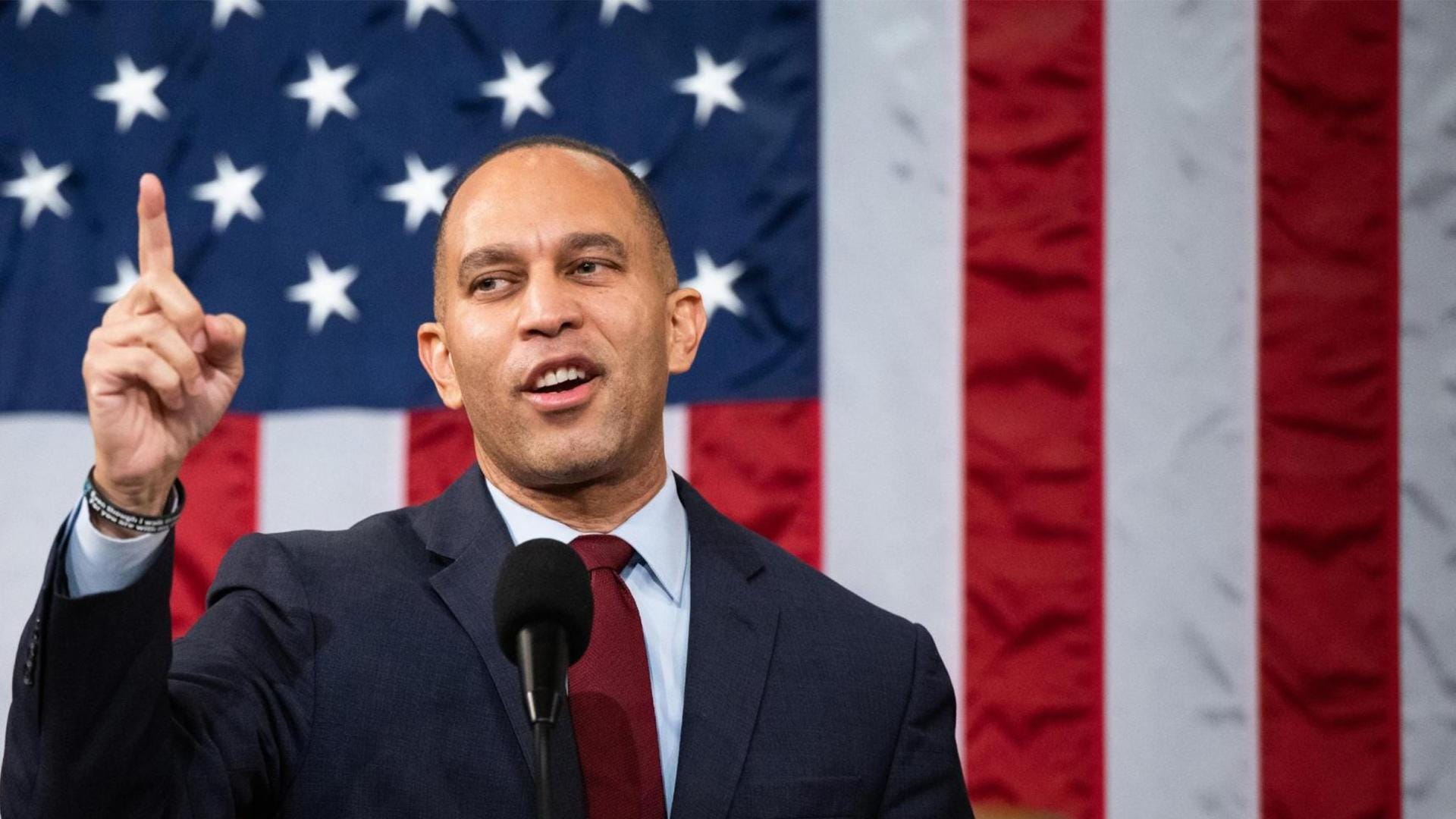
Last night, Saturday Night Live parodied Senate Minority Leader Chuck Schumer and House Minority Leader Hakeem Jeffries. And it’s somewhat easy to make them the two punching bags given how Democratic voters are furious at their party ever since Trump’s re-election.
But in a way, the election could not have gone better for Jeffries. In his home state of New York, Jeffries had to contend with an insurgent left-wing after Zohran Mamdani became mayor of New York and left-wing candidate Brad Lander defeated Rep. Dan Goldman in New York’s 10th district and Darializa Avila Chevalier defeated Rep. Adriano Espaillat in New York’s 13th district. Democratic Socialist of America-backed Claire Valdez also won an open seat in New York’s 7th district.
Had Democrats won only a narrow majority, he would have been in the same position as Kevin McCarthy, who ultimately faced a revolt in his own party that led to his ouster, or House Speaker Mike Johnson, who always barely kept his conference together and had to rely heavily on Trump to enforce party discipline.
Instead, Democrats will gain 250 seats in Congress. And while yes, there will be some socialist elected officials, there will be far more moderate candidates, including many that he backed like Cait Conley in New York’s 17th district. He campaigned with Bob Brooks, the Bernie Sanders-backed moderate (a conundrum, I know), who flipped a seat in Pennsylvania’s 7th district. All of these swing district candidates will give him political cache. It will also give him leverage to say that progressives either work with him or he can rely on the Blue Dogs or other mainstream Democrats.
As I said in the mailbag on Saturday, it’s highly unlikely that Schumer does not become majority leader. He recruited most of the winning swing-state candidates and funded them well. There’s also just the fact that majority leaders need only a majority of their caucus.
That being said, getting the job is harder than actually doing the job. With progressives like Abdul El-Sayed of Michigan, Troy Jackson of Maine, Peggy Flanagan of Minnesota and Juliana Stratton of Illinois all criticizing Schumer and saying they would oppose him as majority leader, they could form a concentrated bloc within the Democratic caucus not unlike the one Republicans had with Sens. Ted Cruz, Rand Paul and Mike Lee after the Tea Party wave. That means Schumer would need to hold the rest of his caucus together or even rely on Republicans to pass funding bills and the National Defense Authorization Act. And one move that angers the base means Democrats will call for Rep. Alexandria Ocasio-Cortez (D-N.Y.) to replace him.
What I’m reading: Hannah Nathanson writes in The Washington Post about how the Trump administration fired government workers focused on DEI initiatives and then the Heritage Foundation put them on a blacklist. Danielle Paquette in The Washington Post on the Statue of Liberty tour guide who had enough. Albert Samaha in The New Yorker on French basketball players, including my GOAT Victor Wembanyama, taking over the NBA.
Your regular Bam Bam post:

That does it for The Political Spectrum. Thanks for reading. If you like this newsletter, please subscribe below.